Alaskan Assistance Struggles: Navigating the Bureaucratic Maze
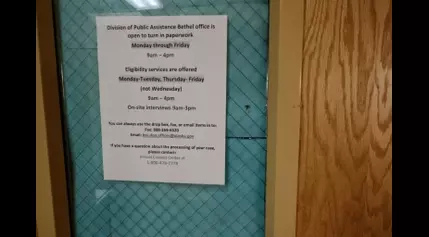
In the heart of Bethel, Alaska, a sign on the door of the Division of Public Assistance office serves as a stark reminder of the challenges facing the state's social safety net. As the food stamp backlog continues to plague the region, pro bono attorneys and volunteers at Alaska Legal Services have been inundated with requests from Alaskans seeking fair hearings to secure their overdue benefits. This article delves into the ongoing struggles, the state's efforts to address the issue, and the persistent obstacles that Alaskans face in accessing the assistance they desperately need.Alaskans Caught in the Bureaucratic Maze
Persistent Paperwork Delays
Despite the state's efforts to streamline the process, Alaskans continue to face significant delays in the processing of their public assistance applications and recertifications. Leigh Dickey, the advocacy director at Alaska Legal Services, reports that the number of requests for fair hearings has doubled in recent months, indicating that the Division of Public Assistance is still grappling with the same problem: paperwork processing delays.Dickey emphasizes that the division's claims of having resolved the issue are not reflected in the experiences of their clients. "We are still seeing clients coming in who have delays at recertification," she says, highlighting the ongoing challenges faced by Alaskans in maintaining their benefits.
Lack of Transparency and Communication
Another major pain point for Alaskans seeking assistance is the limited access to information and support from the Division of Public Assistance. Several of the state's public assistance offices remain closed or only offer "general inquiries," leaving individuals unable to check the status of their applications or receive personalized assistance in resolving issues.Dickey describes the situation as a lack of coordination within the division, where "one hand doesn't know what the other hand is doing." She cites instances where the division requests specific paperwork from clients, only to neglect to file it, resulting in the loss of benefits.
Uneven Progress in Office Reopenings
The Division of Public Assistance has taken steps to address the challenges, including efforts to reopen offices and increase staff training. However, the progress has been uneven, with only the Fairbanks office having fully reopened as of July, and the Ketchikan office expected to follow suit in August.The limited access to in-person assistance has exacerbated the frustrations of Alaskans seeking help. Dickey emphasizes that the inability to check the status of applications is a major pain point for many of the individuals who have filed complaints with Alaska Legal Services.
Technological Advancements and Ongoing Challenges
In a bid to streamline the application process, the Division of Public Assistance has launched an online portal called Alaska Connect. This cloud-based system aims to reduce the administrative burden on eligibility technicians and decrease the likelihood of paperwork mix-ups.Deb Etheridge, the division's director, believes that the online portal will provide better customer service and make it easier for Alaskans to access and apply for benefits. However, the system currently lacks the ability for individuals to check the status of their applications, a feature that is expected to be added in the near future.Despite the technological advancements, Alaskans continue to face persistent challenges in navigating the public assistance system. The division's efforts to improve processing times have yielded some progress, with the percentage of on-time food stamp recertifications increasing from around 5% in early 2022 to 89% currently. However, the ongoing delays and bureaucratic hurdles have left many Alaskans feeling frustrated and uncertain about their ability to access the support they need.
Lawmakers and the Governor's Response
In response to the ongoing challenges, lawmakers and the governor have allocated more than million in funding for tech solutions and additional staff. These investments are intended to address the root causes of the delays and improve the overall efficiency of the public assistance system.However, the impact of these efforts has yet to be fully realized, as many Alaskans continue to struggle with the bureaucratic maze. The Division of Public Assistance acknowledges the need for further improvements and is committed to working towards fully reopened offices and enhanced customer service.As Alaskans navigate the complex web of public assistance, the state's efforts to streamline the process and provide timely support remain a work in progress. The challenges highlighted in this article underscore the critical importance of ensuring that the social safety net functions effectively, providing a lifeline to those in need and restoring a sense of stability and security in the lives of Alaskans.